44 zero coupon bonds risk
Advantages and Risks of Zero Coupon Treasury Bonds Unique Risks of Zero-Coupon U.S. Treasury Bonds Because of their sensitivity to interest rates, zero-coupon Treasury bonds have incredibly high interest rate risk. Treasury zeros fall significantly... Do zero-coupon bonds have interest rate risk? - Quora Answer (1 of 3): There are two types of interest rate risk: price risk and reinvestment rate risk. Zeros always have exposure to the first type, and MIGHT have exposure to the second type. When people use the term "interest rate risk", they usually refer to the first type of risk (i.w. "price ri...
Zero-Coupon Bond - Definition, How It Works, Formula Zero-coupon bonds are the only type of fixed-income investments that are not subject to investment risk – they do not involve periodic coupon payments. Interest rate risk is the risk that an investor’s bond will decline in value due to fluctuations in the interest rate.
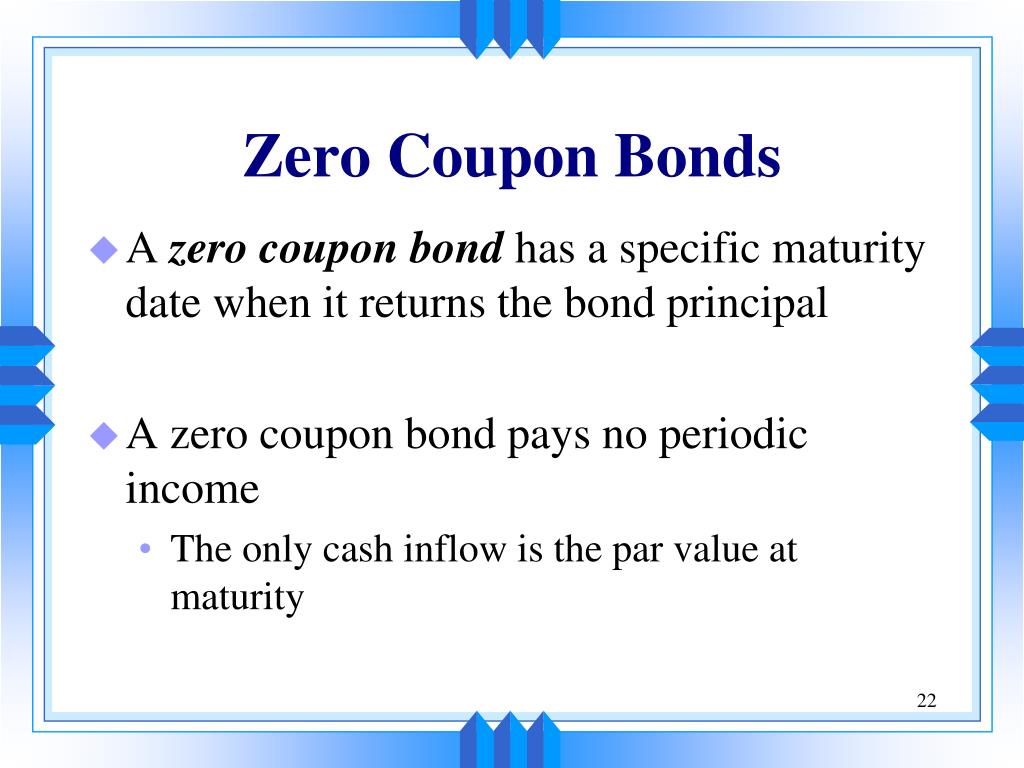
Zero coupon bonds risk
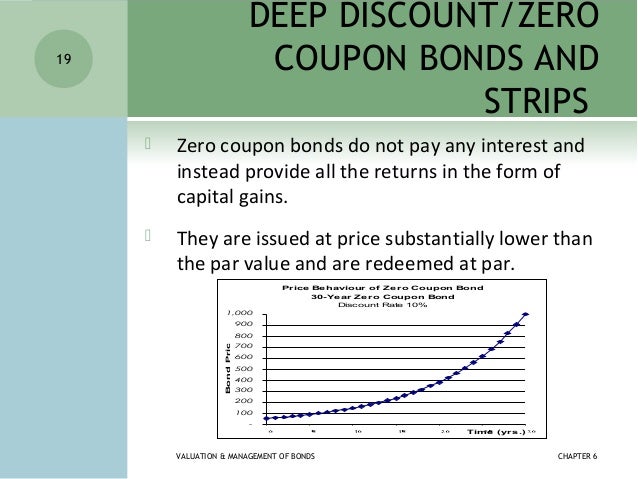
Zero Coupon Bond Value Calculator: Calculate Price, Yield to … Economist Gary Shilling mentioned holders of 30-year zero-coupon bonds purchased in the early 1980s outperformed the S&P 500 with dividends reinvested by 500% over the subsequent 30-years as interest rates fell from around 14.6% to around 3%. I started investing in 30 Year zero coupon treasuries. Now, zero coupon bonds don't pay any interest ... Types of Bonds | Boundless Finance - Lumen Learning This method of creating zero coupon bonds is known as stripping, and the contracts are known as strip bonds. “STRIPS” stands for Separate Trading of Registered Interest and Principal Securities. Zero coupon bonds may be long- or short-term investments. Long-term zero coupon maturity dates typically start at 10 to 15 years. The Pros and Cons of Zero-Coupon Bonds - Financial Web Zero-coupon bonds are a type of bond that does not pay any regular interest payments to the investor. Instead, you purchase the bond for a discount and then when it matures, you can get back the face value of the bond. ... Another problem with zero coupon bonds is that they have a higher default risk than traditional bonds. The reason behind ...
Zero coupon bonds risk. Zero Coupon Bond Value - Formula (with Calculator) After the zero coupon bond is issued, the value may fluctuate as the current interest rates of the market may change. Example of Zero Coupon Bond Formula A 5 year zero coupon bond is issued with a face value of $100 and a rate of 6%. Looking at the formula, $100 would be F, 6% would be r, and t would be 5 years. Zero-Coupon Swap Definition - Investopedia Aug 26, 2021 · Zero Coupon Swap: A zero coupon swap is an exchange of income streams in which the stream of floating interest-rate payments is made periodically, as it would be in a plain vanilla swap , but the ... Zero Coupon Bond Funds: What Are They? - The Balance A zero coupon bond is a bond that doesn't offer interest payments but sells at a discount—a price lower than its face value. 1 The bondholder doesn't get paid while they own the bond, but when the bond matures, they will be repaid the full face value. Zero coupon bond funds are funds that hold these types of bonds. Solved | Chegg.com Zero-coupon bonds do NOT have which type of risk for investors? Group of answer choices b) Interest Rate Risk c) Credit Risk e) Systematic Risk a) Reinvestment Risk d) Unsystematic Risk Expert Answer Option (a) is Correct Reinvestment Risk Reason : Zero-coupon bonds … View the full answer Previous question Next question
All the 21 Types of Bonds | General Features and Valuation | eFM Apr 28, 2022 · Zero-Coupon Bonds. A zero-coupon bond is a type of bond with no coupon payments. It is not that there is no yield; the zero-coupon bonds are issued at a price lower than the face value (say 950$) and then pay the face value on maturity ($1000). ... Since the government agency issues the bonds, they are almost risk-free, or at least both are ... Risk-Neutral Pricing Formula for Zero-coupon bonds with Default Risk ... I am looking for the equations or papers showing the risk-neutral pricing for zero-coupon bonds including default risk. I already tried Googling and searching SSRN and Jstor. bond zero-coupon risk-neutral. Share. Improve this question. Follow asked Apr 4, 2020 at 17:02. Jake Freeman Jake Freeman. 158 4 4 ... What Are Zero Coupon Bonds And Their Risks- Tavaga | Tavagapedia Zero-Coupon Bonds can render great returns if used strategically for your investment goal. In absence of any exceptional case, like intermittent coupon payments, Zero- Coupon Bond's yield to maturity is calculated as: Yield = (FV/PV) 1/n - 1 Where, FV = Face value PV = Present Value n = number of periods Example How to Buy Zero Coupon Bonds | Finance - Zacks Zero coupon bonds are issued by the Treasury Department, corporations and municipalities. The bonds are considered a low-risk investment compared to stocks, commodities and derivatives. Purchase...
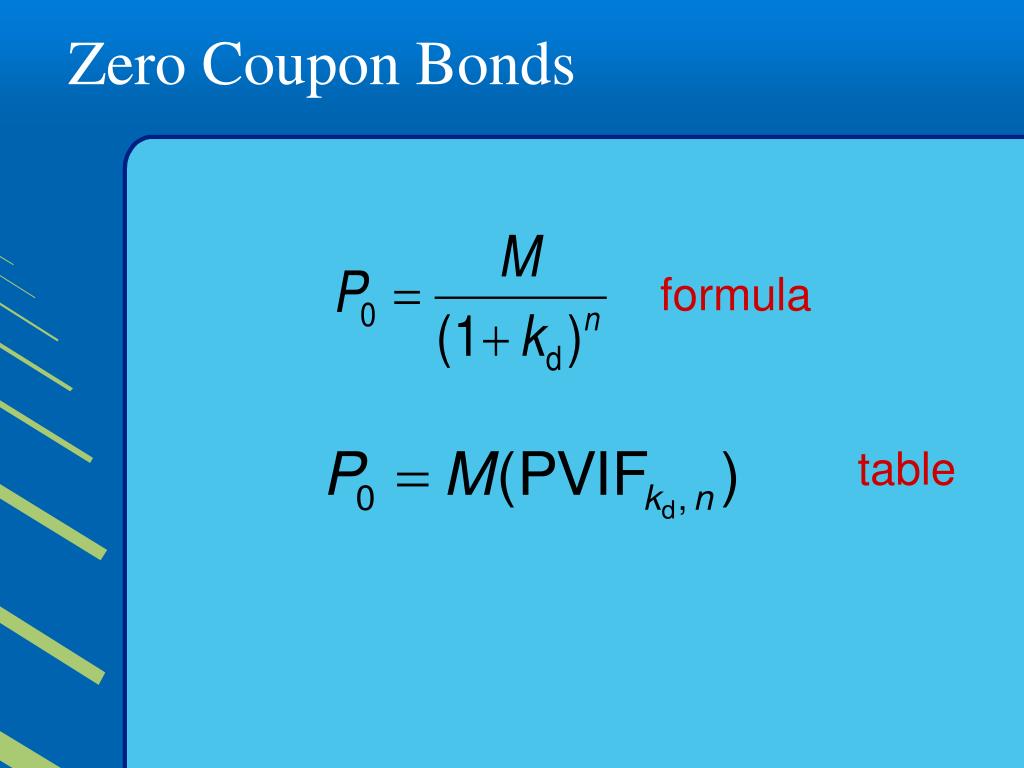
Zero-Coupon Bond Definition - Investopedia Feb 26, 2022 · Zero-Coupon Bond: A zero-coupon bond is a debt security that doesn't pay interest (a coupon) but is traded at a deep discount, rendering profit at maturity when the bond is redeemed for its full ... Zero-Coupon Bonds: Definition, Formula, Example, Advantages, and ... They are safe investment instruments, and have a lower element of risk involved. Long Dated zero coupon bonds are said to be the most responsive to interest rate fluctuations. Therefore, in case of longer time duration (a higher 'N'), it might prove to be profitable for the bond holder. Disadvantages of Zero-Coupon Bonds How to Calculate a Zero Coupon Bond Price - Double Entry Bookkeeping The zero coupon bond price is calculated as follows: n = 3 i = 7% FV = Face value of the bond = 1,000 Zero coupon bond price = FV / (1 + i) n Zero coupon bond price = 1,000 / (1 + 7%) 3 Zero coupon bond price = 816.30 (rounded to 816) Zero Coupon Bond Calculator - What is the Market Price? - DQYDJ Benefits and Drawbacks of Zero Coupon Bonds. Zero coupon bonds have a duration equal to their time until maturity, unlike bonds which pay coupons. Duration of a bond is a length of time representing how sensitive a bond is to changes in interest rates. Since zero coupon bonds have an equal duration and maturity, interest rate changes have more ...
PPT - Chapter 12 Bond Prices and the Importance of Duration PowerPoint Presentation - ID:324061
Zero-Coupon Bond - Definition, How It Works, Formula A zero-coupon bond is a bond that pays no interest. The bond trades at a discount to its face value. Reinvestment risk is not relevant for zero-coupon bonds, but interest rate risk is relevant for the bonds. Understanding Zero-Coupon Bonds As a zero-coupon bond does not pay periodic coupons, the bond trades at a discount to its face value.
Sources of Finance | Owned-Borrowed, Long-Short Term, Internal-External | Page 9 of 11
Should I Invest in Zero Coupon Bonds? | The Motley Fool Specifically, if rates rise, they make the value of your zero coupon bond go down, potentially forcing you to sell at a depressed price if your timing is bad. Another problem with zero coupon bonds...
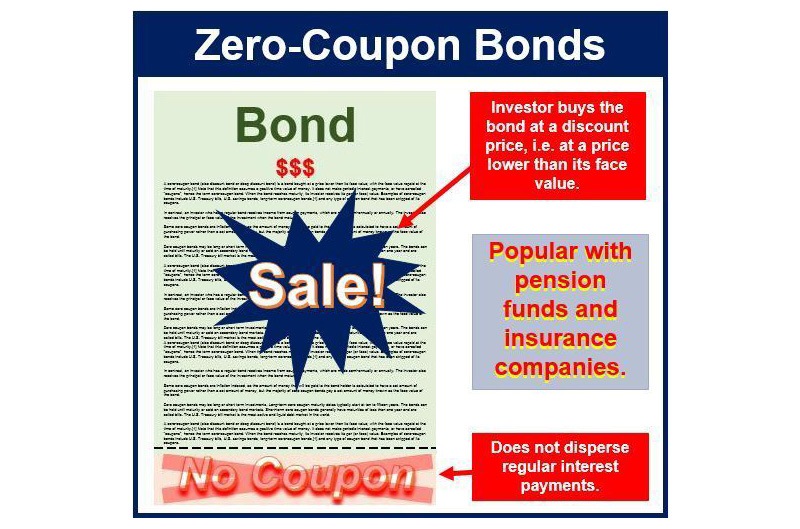
What is a Zero-Coupon Bond? Definition and Meaning - FortuneZ
What Is a Zero-Coupon Bond? Definition, Characteristics & Example The longer the time until a bond matures, the riskier it is, so generally, bonds with longer terms sell at steeper discounts (i.e., have higher yields). Typically, the following formula is used to...

PPT - Analytics of Risk Management I: Sensitivity and Derivative Based Measures of Risk ...
Zero-Coupon Bond Definition - Investopedia Zero-coupon bonds are like other bonds, in that they do carry various types of risk, because they are subject to interest rate risk if investors sell them before maturity. How Does a Zero-Coupon...
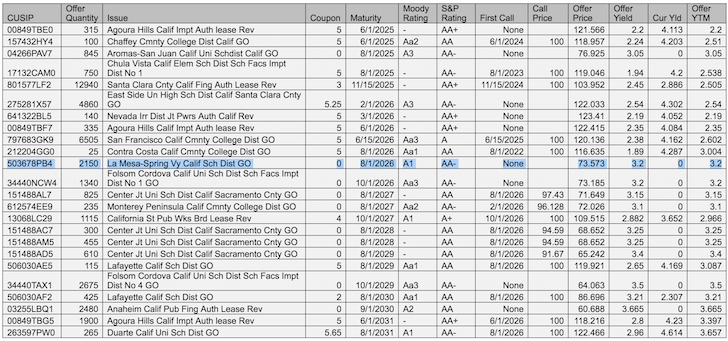
The Allure Of Zero Coupon Municipal Bonds: A Low Risk Investment With Stable Interest
Zero-coupon bond - Wikipedia A zero coupon bond (also discount bond or deep discount bond) is a bond in which the face value is repaid at the time of maturity. That definition assumes a positive time value of money.It does not make periodic interest payments or have so-called coupons, hence the term zero coupon bond.When the bond reaches maturity, its investor receives its par (or face) value.
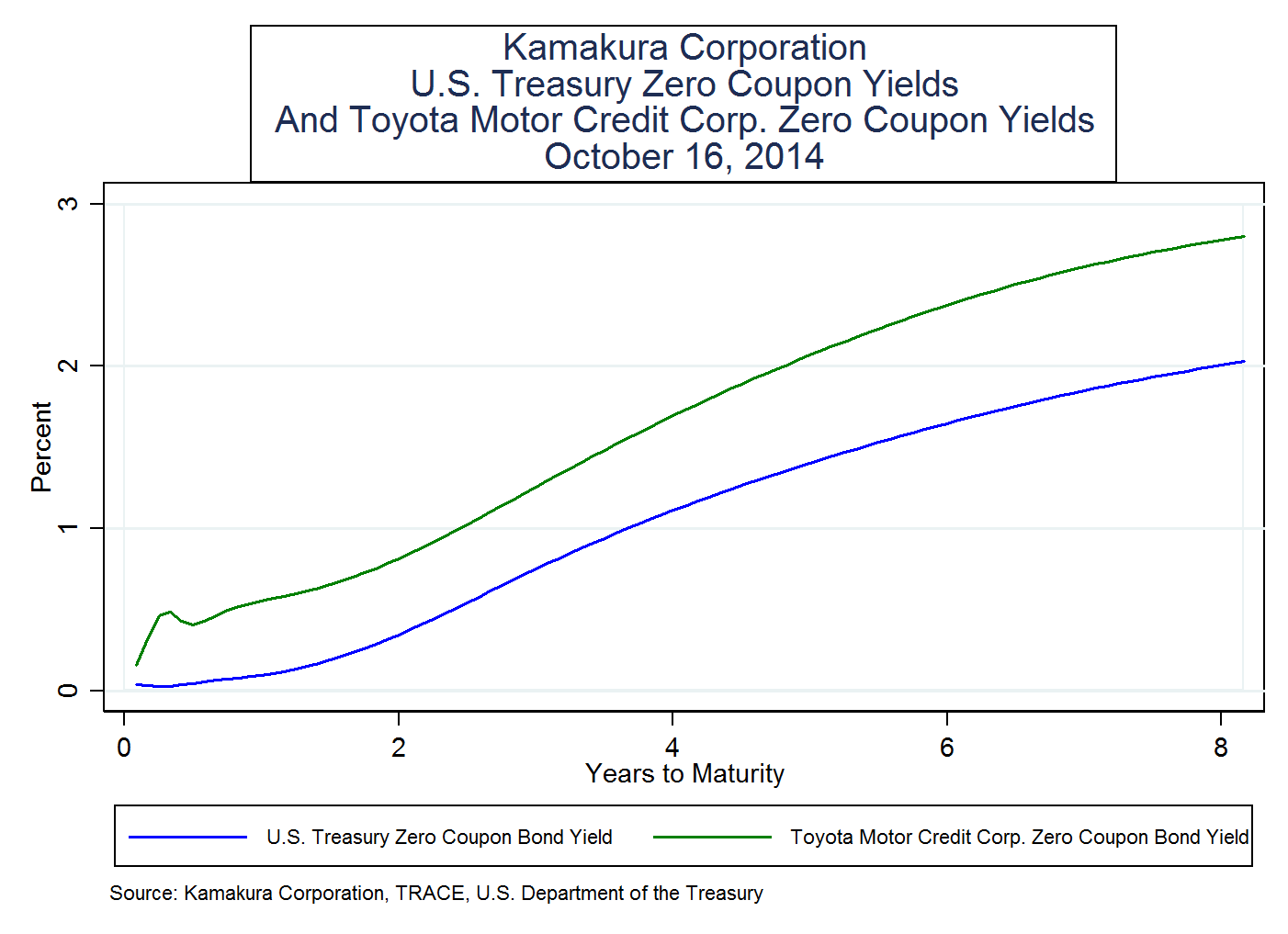
Toyota Motor Credit Corp. Zero Coupon Bond Yields And Credit Spreads - Donald van Deventer ...
Zero-Coupon Bonds : What is Zero Coupon Bond? - Groww But the Zero Coupon bonds remove the reinvestment risk. Zero Coupon bonds do not allow any periodic coupon payments and thus a fixed interest on Zero Coupon bonds is assured. Fixed returns: The Zero Coupon bond is an ideal choice for those who prefer the long-term investment and earn in a lump sum. The reason behind this is the assurance of a ...
/GettyImages-1169665828-e5e668e6aa454b60b5d06e110711eff3.jpg)
What is the difference between a zero-coupon bond and a regular bond?
Zero Coupon Bond (Definition, Formula, Examples, Calculations) Zero-Coupon Bond (Also known as Pure Discount Bond or Accrual Bond) refers to those bonds which are issued at a discount to its par value and makes no periodic interest payment, unlike a normal coupon-bearing bond. In other words, its annual implied interest payment is included in its face value which is paid at the maturity of such bond.
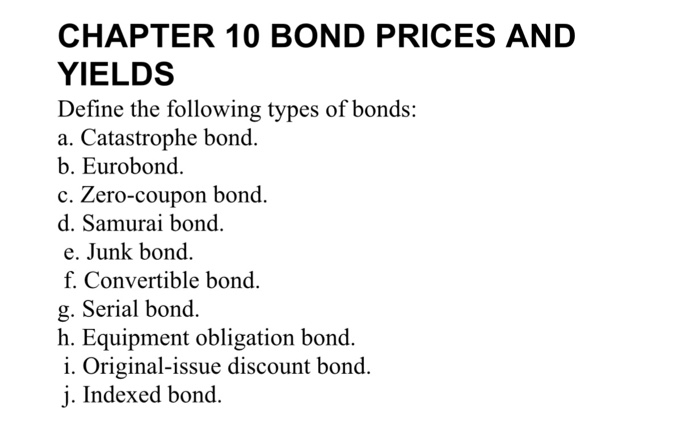
Solved: Define The Following Types Of Bonds: A. Catastroph... | Chegg.com
What Is a Zero-Coupon Bond? Definition, Advantages, Risks A zero-coupon bond is a discounted investment that can help you save for a specific future goal. Tara Mastroeni. Nov 25, 2020, 10:09 AM. Save Article Icon. A bookmark. Facebook Icon. The letter F ...
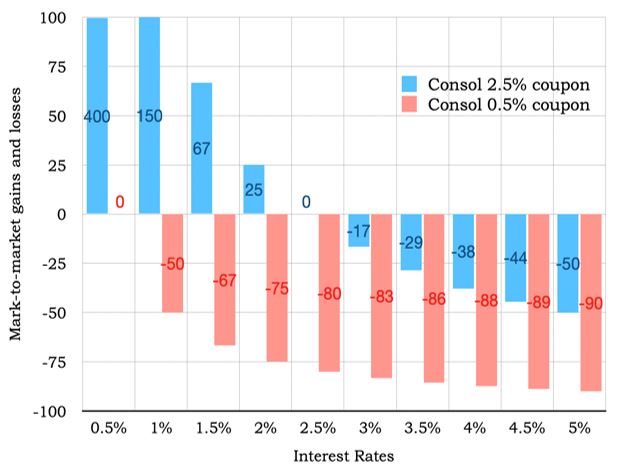
Using perpetual bonds to finance the European Recovery Fund | VOX, CEPR Policy Portal
Zero-Coupon Bonds: Pros and Cons Higher Yields: Firstly, zero-coupon bonds are perceived as higher-risk bonds. This is because investors pay money upfront and then do not have much control over it. Also, since the money is locked in over longer periods of time, the perceived risk is more.
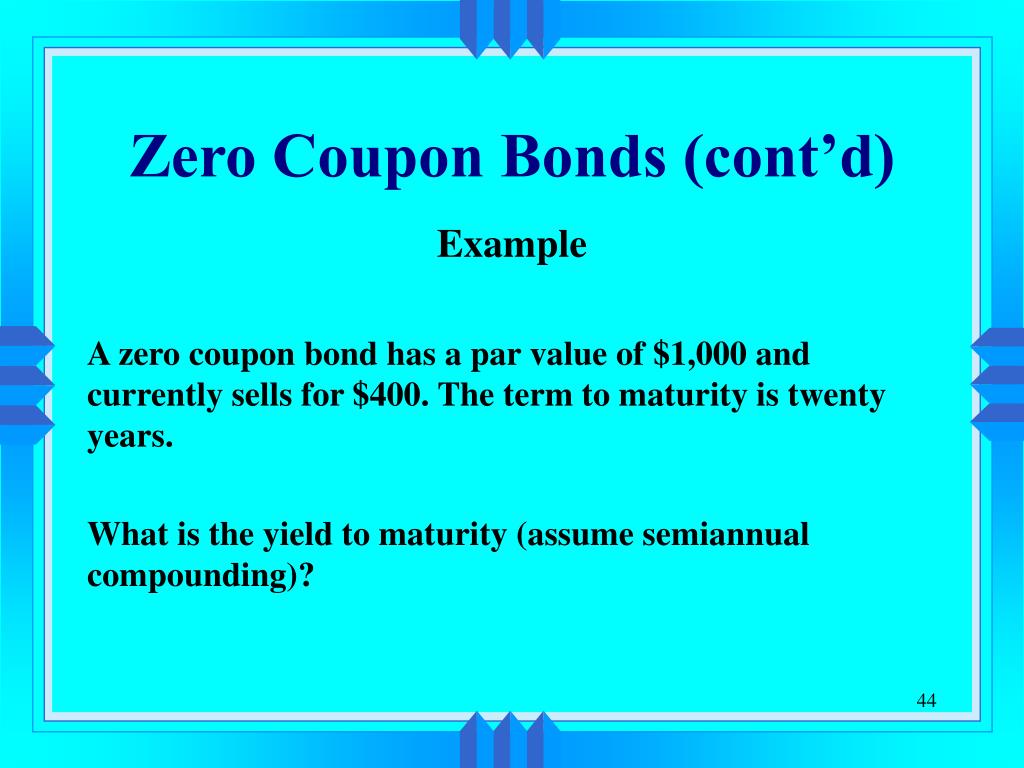
PPT - Chapter 12 Bond Prices and the Importance of Duration PowerPoint Presentation - ID:434237
Zero Coupon Muni Bonds - What You Need to Know The largest benefit of zero coupon muni bonds is the low minimum investment since the securities are sold at a discount to face value. For example, a bond with a face value of $10,000 that matures in 20 years with a 5.5% coupon may be purchased for less than $5,000. This means that investors can purchase more face value at a lower upfront ...
PPT - Fixed-Income Securities: Characteristics and Valuation PowerPoint Presentation - ID:6147326
Treasury Bills vs Bonds | Top 5 Differences (with Infographics) Bonds are debt instruments also issued by the government or corporate for tenure equal to or more than 2 years period. T-bills do not pay any coupon. They are floated as a zero-coupon bond to the investors, they are issued at discounts, and the investors receive the face value at the end of the tenure, which is the return on their investment.
Bonds: A Financial Instrument | Intelligent Economist
Zero-Coupon Bond - an overview | ScienceDirect Topics Zero-coupon bonds linked to the inflation do not pay coupons. Therefore, the unique adjustment is made to the principal. These types of bonds offer no reinvestment risk due to the absence of coupon payments and have the longest duration than other inflation-linked bonds. The value is given by Equation (6.8):

Zero Coupon Bonds - YouTube
Bonds - Overview, Examples of Government and Corporate Bonds 4. Treasury bonds. Maturity > 10 years . 5. Zero-coupon bond. Zero-coupon bonds make no coupon payments but are issued at a discounted price. 6. Municipal bonds. Bonds issued by local governments or states are called municipal bonds. They come with a greater risk than federal government bonds but offer a higher yield. Examples of Government ...

Amortizing Bond Pricing and Valuation Guide | FinPricing
The One-Minute Guide to Zero Coupon Bonds | FINRA.org Like virtually all bonds, zero-coupon bonds are subject to interest-rate risk if you sell before maturity. If interest rates rise, the value of your zero-coupon bond on the secondary market will likely fall. Long-term zeros can be particularly sensitive to changes in interest rates, exposing them to what is known as duration risk.
Risk and return bond return...3
Zero Coupon Bonds- Taxability under Income Tax Act, 1961 Zero Coupon Bonds carries lesser risk with fixed income option. The return on these bonds is comparably higher as compared to other fixed income options. Further, the most important advantage of the zero coupon bonds is that no tax is payable on interest element if you invest in notified zero coupon bonds.
Post a Comment for "44 zero coupon bonds risk"